
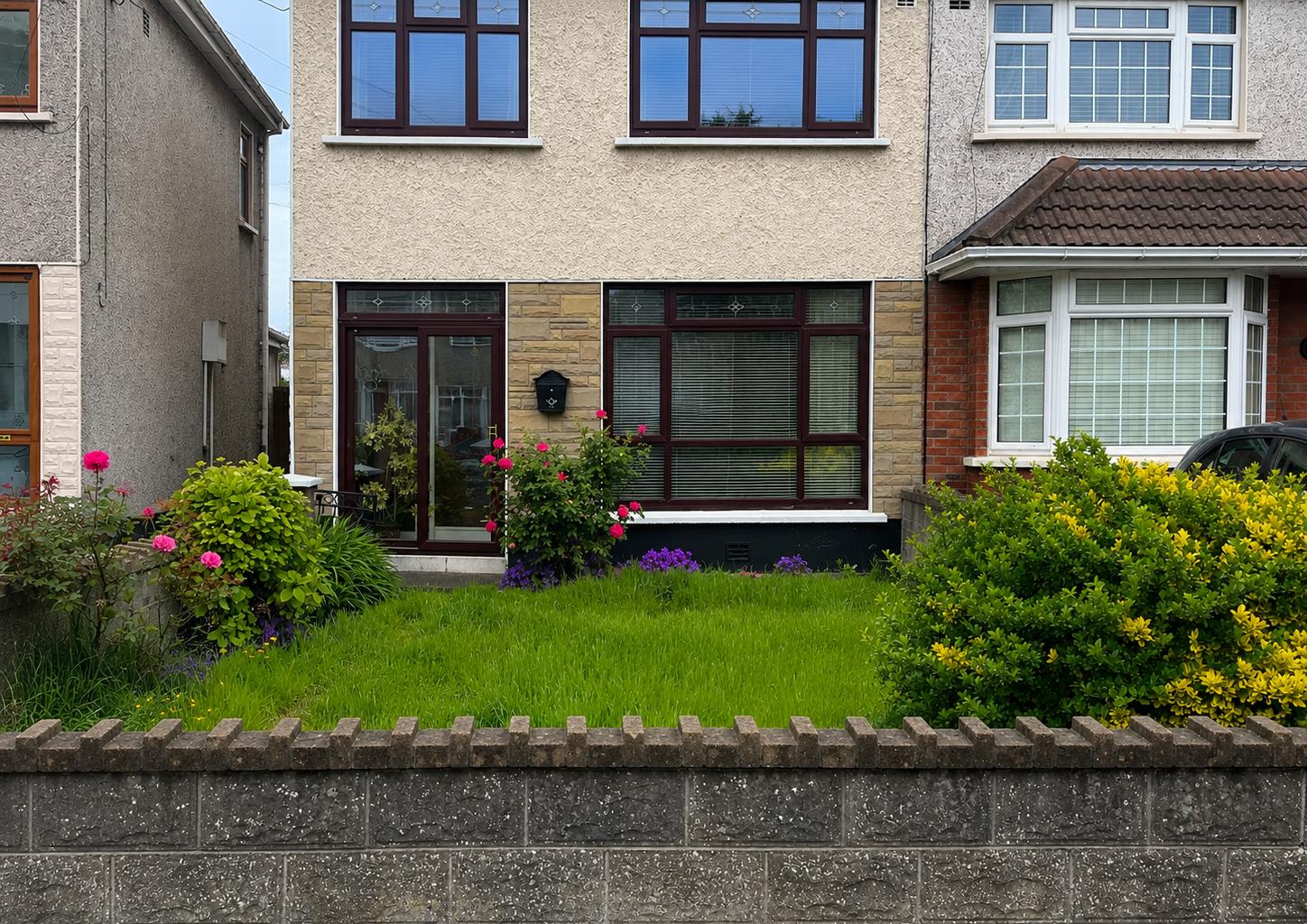
Somewhere in Dublin right now, a dog is standing proudly in the middle of a destroyed lawn, absolutely delighted with itself. If that dog is yours, you already know the cycle: mud tracked into the kitchen from October to April, yellow patches wherever the dog favours, a racing line worn bare along the fence, and one flower bed that has been unilaterally rezoned for digging. Building a dog friendly garden in Dublin is not about choosing between the dog and the garden. Done right, you keep both.
We maintain gardens for a lot of dog households, and the same handful of design moves fix ninety percent of the problems. This guide covers the realistic lawn options (including when to stop fighting and go artificial), planting that survives dogs and is safe for them, pet-safe weed control, and the layout tricks that redirect canine chaos away from the parts of the garden you care about.
The Lawn Question: Real Grass, Tough Grass or Artificial?
Keeping a real lawn alive with a dog
- Seed for hard wear. Ryegrass-heavy mixes take traffic far better than fine ornamental blends. When we repair dog lawns, hard-wearing seed goes in as standard.
- Deal with urine patches fast. The yellow circles are concentrated nitrogen. Diluting the spot with a can of water within a few hours prevents most burns, and training a gravel toileting corner prevents nearly all of them.
- Keep the lawn strong, not just cut. A fed, aerated lawn recovers from wear; a struggling one just wears out. The full routine is in our lawn care guide.
- Accept the racing line. Dogs patrol the same route daily. Either accept a worn path, put stepping stones or bark along it, and make it a feature, or fence planting to interrupt the circuit.
When artificial grass is the honest answer
Small garden, big dog, or several dogs: at some point real grass simply cannot regrow as fast as it is destroyed. Pet-grade artificial turf ends the mud, survives the digging attempts, rinses clean, and looks the same in February as June. It is the single most requested change among our dog-owning clients, and the honest pros, cons and installation detail are in our artificial grass guide. For re-turfing a larger garden with real grass instead, see the lawn turfing guide.
Planting That Survives Dogs (and Is Safe for Them)
Tough enough: established shrubs like escallonia, hebe and griselinia, ornamental grasses, lavender and hardy geraniums shrug off the occasional crash-through far better than delicate perennials. Raised beds and generous pots put fragile planting above the chaos entirely.
Safe enough: a handful of common garden plants are genuinely toxic to dogs and worth designing around, especially for puppies and chewers:
- Avoid or fence off: foxglove, yew, laburnum, oleander, autumn crocus, and spring bulbs like daffodil and tulip where a digger can reach them.
- Cocoa-shell mulch is attractive to dogs and toxic; we use bark mulch in dog gardens instead.
- Most classic garden staples, roses, lavender, hebes, grasses, are no problem at all.
If in doubt about a specific plant, ask us or check with your vet; the toxic list is short and easy to design around without losing anything.
Pet-Safe Weed Control and Lawn Treatments
The commonest worry dog owners raise with us: can the garden be treated without risking the dog? Yes, with the right methods and honesty about timing:
- We default to manual and low-impact weed control in pet gardens, exactly as described in our weed control guide.
- Where a targeted treatment is genuinely needed, we use pet-appropriate products and tell you exactly how long to keep the dog off, typically just until dry.
- Lawn feeds are chosen and timed the same way. There is no reason a dog household cannot have a treated, healthy lawn.
Layout Tricks That Save Dog Gardens
- A gravel toileting corner, trained early, saves the whole lawn. Rinsed weekly, it stays fresh.
- A dig pit for diggers: a sand or bark corner where digging is allowed redirects the instinct from your beds. It genuinely works.
- Paths where the dog already runs: put hard surfaces along the patrol routes and the mud problem halves.
- Check the boundary like an escape artist would: gaps under fences, compost heaps as launch platforms, loose panels. Fixing the fence line is cheaper than posters for a lost dog.
- Shade and water in summer: a shaded corner matters on the rare hot week, particularly with artificial grass which runs warmer than real turf.
Case Study: Two Collies vs One Lawn in Walkinstown
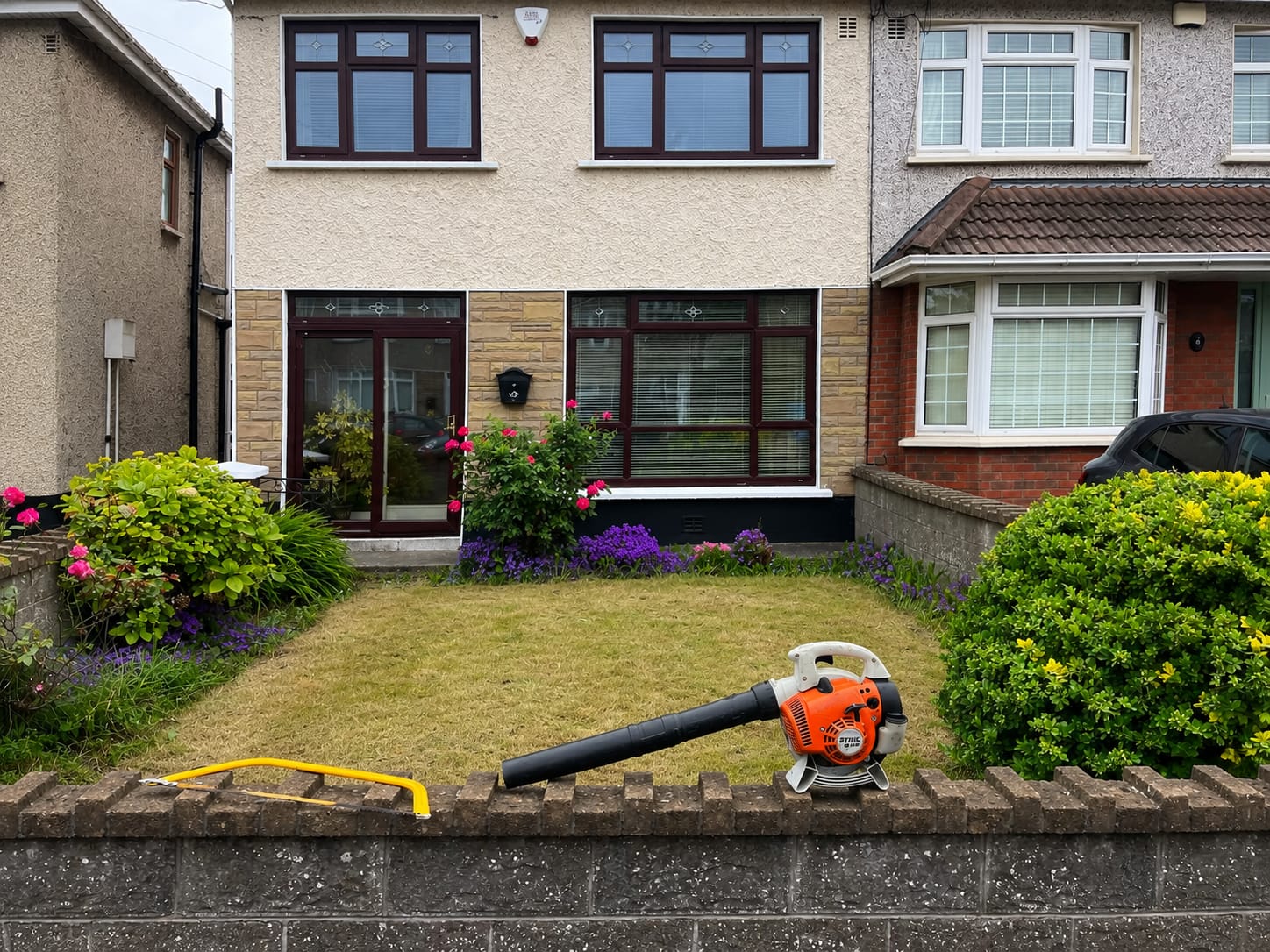
A family in Walkinstown had two young collies and, technically, a lawn: a mud oval with a racing line worn to clay along the back fence and beds that had been comprehensively excavated. They assumed the whole garden had to be paved.
We rebuilt it around the dogs instead: a gravel path laid directly on the racing line, the worst of the lawn re-seeded with a hard-wearing mix and protected until established, a bark dig pit in the corner the collies already favoured, raised beds for the replanted borders, and a gravel toileting area by the side passage. Maintenance visits keep the lawn fed and firm.
"The dogs use the path like they designed it themselves. First winter in years the kitchen floor stayed clean."
Key Takeaways
- Hard-wearing grass mixes, quick urine-patch dilution and a trained toileting corner keep real lawns alive with dogs.
- Small garden plus big dog usually equals artificial grass, and that is a solution, not a defeat.
- Design around the short toxic-plant list and use bark, never cocoa mulch, in dog gardens.
- Weed control and lawn treatments are fine in pet households when methods and timing are chosen properly.
- Work with the dog's habits, paths on patrol routes, a dig pit for diggers, rather than against them.
Related reading: Artificial Grass Installation in Dublin · Lawn Care in Dublin · Weed Control in Dublin
Garden Losing to the Dog?
WhatsApp Primegardener.ie a photo of the battlefield and we'll design the truce: tough lawns, pet-grade artificial grass, safe planting and pet-safe maintenance, all from one local team that works around your dog, not against it.
Get dog-proof garden adviceFrequently Asked Questions
How do I stop my dog's urine burning the lawn?
Dilute fresh spots with a watering can within a few hours, keep the lawn well watered and fed so it recovers, and ideally train a gravel toileting corner. Hard-wearing grass mixes also recover from minor burns much faster than fine lawns.
Is artificial grass really OK for dogs?
Pet-grade artificial turf is excellent for dogs: it drains urine through, solids lift cleanly, it cannot be dug up, and a rinse keeps it fresh. It is the most popular single change among our dog-owning clients.
Which garden plants are dangerous for dogs?
The main ones to design around are foxglove, yew, laburnum, autumn crocus and unfenced spring bulbs, plus cocoa-shell mulch. The list is short, and most classic garden planting is completely safe.
Can you treat my lawn and beds safely with a dog in the house?
Yes. We default to manual methods in pet gardens, use pet-appropriate products only where genuinely needed, and tell you exactly how long to keep the dog off treated areas, usually just until dry.
My dog has worn a bare track around the garden. Can it be fixed?
The track can be re-seeded, but the dog will remake it, so the better fix is to surface it: stepping stones, gravel or bark along the route turns the patrol path into a feature and ends the mud.