
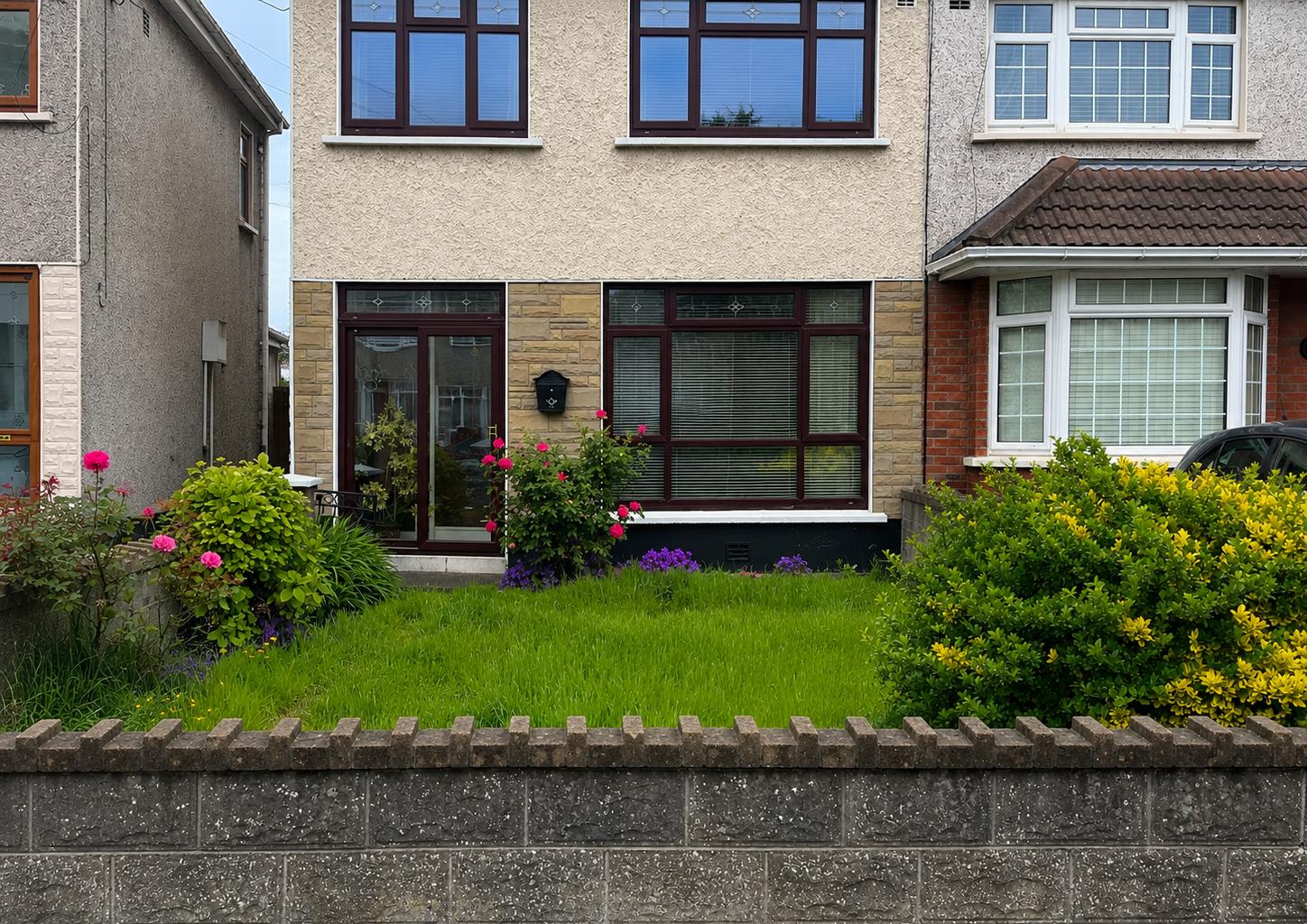
The gardens behind the red-brick terraces of Drumcondra, Glasnevin and Phibsborough are a type of their own, and if you are looking for a gardener in Drumcondra or the surrounding north city, your garden probably ticks most of these boxes: long and narrow, high walls on both sides, shaded for a good part of the day, a mature tree or two that were planted when the house was young, and no way in or out except through the hall.
That last point matters more than anything else, and it is the thing most quotes get wrong. In a suburban garden with side access, a day's cuttings go straight out to the van. Here, every bag travels through your kitchen. It changes how a job is planned, how long it takes and what it should cost, and a gardener who has not worked these houses before will underestimate all three.
This guide covers what these city gardens need: working with shade instead of against it, looking after old walls and the ivy on them, handling mature trees on tight sites, and the practical realities of getting work done in a house with no rear access.
What Makes North City Gardens Different
- Shape. Long, narrow and walled. The proportions that make these gardens feel like corridors are also what make good design so effective in them.
- Shade. High walls, tall neighbouring houses and mature street trees mean many of these gardens get direct sun for only a few hours. Plant choice has to respect that.
- Old walls. Period brick and lime mortar are far more vulnerable to ivy roots and to careless power washing than modern block.
- Mature trees on small plots. Trees that were sensible a century ago are now large, close to buildings, and often overhanging a neighbour.
- Tired, layered soil. A hundred years of extensions, sheds and buried builder's debris sits under a lot of these beds.
- No rear access. Everything in and out through the house, which shapes the whole job.
The Access Question, and Why It Changes Everything
Nothing affects a city garden job more than how the waste leaves. When it all goes through the hall:
- Waste is bagged, not barrowed. Work is planned around contained loads rather than open piles, and floors get protected on the way through.
- Volume drives the timeline. A hedge cut that takes an hour can take another hour to carry out. Any quote that ignores this is going to change on the day.
- Big machinery is often out. Plenty of jobs here are done with hand tools and smaller equipment by necessity.
- Green waste has to be dealt with properly, which is why our price always includes removal. The full comparison of options is in our garden waste removal guide.
When you get a quote for a garden with no side access, ask specifically how the waste is leaving and whether that is in the price. It is the single most common source of a surprise invoice in these houses.
Working With Shade Instead of Against It
Trying to grow a sun-loving lawn and border in a garden that gets three hours of light is the most expensive mistake in the north city, because it fails slowly and repeatedly. What works instead:
- Shade planting that actually thrives: ferns, hostas, hydrangeas, climbing hydrangea for a north-facing wall, skimmia, sarcococca for winter scent, and ivy where you want reliable evergreen cover.
- Use the walls. In a narrow garden the vertical surfaces are most of your growing space. Wires and trellis turn bare brick into greenery without losing a single square metre of floor.
- Rethink the lawn. Grass in deep shade between two walls rarely succeeds. Quality paving, gravel with generous planting, or artificial grass often serve these gardens far better.
- Light-coloured surfaces and a dark rear wall make a narrow shaded space feel considerably bigger. More small-space tactics are in our small garden ideas guide.
Old Walls, Ivy and Power Washing
Two jobs need extra care on period property, and getting them wrong is expensive:
- Ivy on old brick. On sound modern masonry ivy is largely harmless. On aging brick with lime mortar it exploits every existing weakness and holds damp against the wall. Removal is never a matter of pulling it off, which takes the mortar face with it. Sever at the base, let the growth die back, then peel gently. The full method is in our ivy removal guide.
- Power washing period surfaces. High pressure on old brick, soft stone or original paving strips the surface and blows out mortar joints. These need low pressure and judgement, not maximum settings. Our power washing guide covers matching pressure to surface.
Mature Trees on Tight City Sites
A large tree in a small garden is worth keeping and worth managing. Crown lifting to bring light back onto the garden, thinning to reduce density, and deadwood removal all make a real difference without losing the tree. What needs specialist input is felling, climbing work in a big crown, or anything structurally suspect, and we will say so rather than take on work that is not ours. Worth knowing too: trees in some parts of the city carry Tree Preservation Orders or sit in conservation areas, so significant work can need council permission. Our tree pruning guide covers what to check.
The Most Common North City Garden Mistake
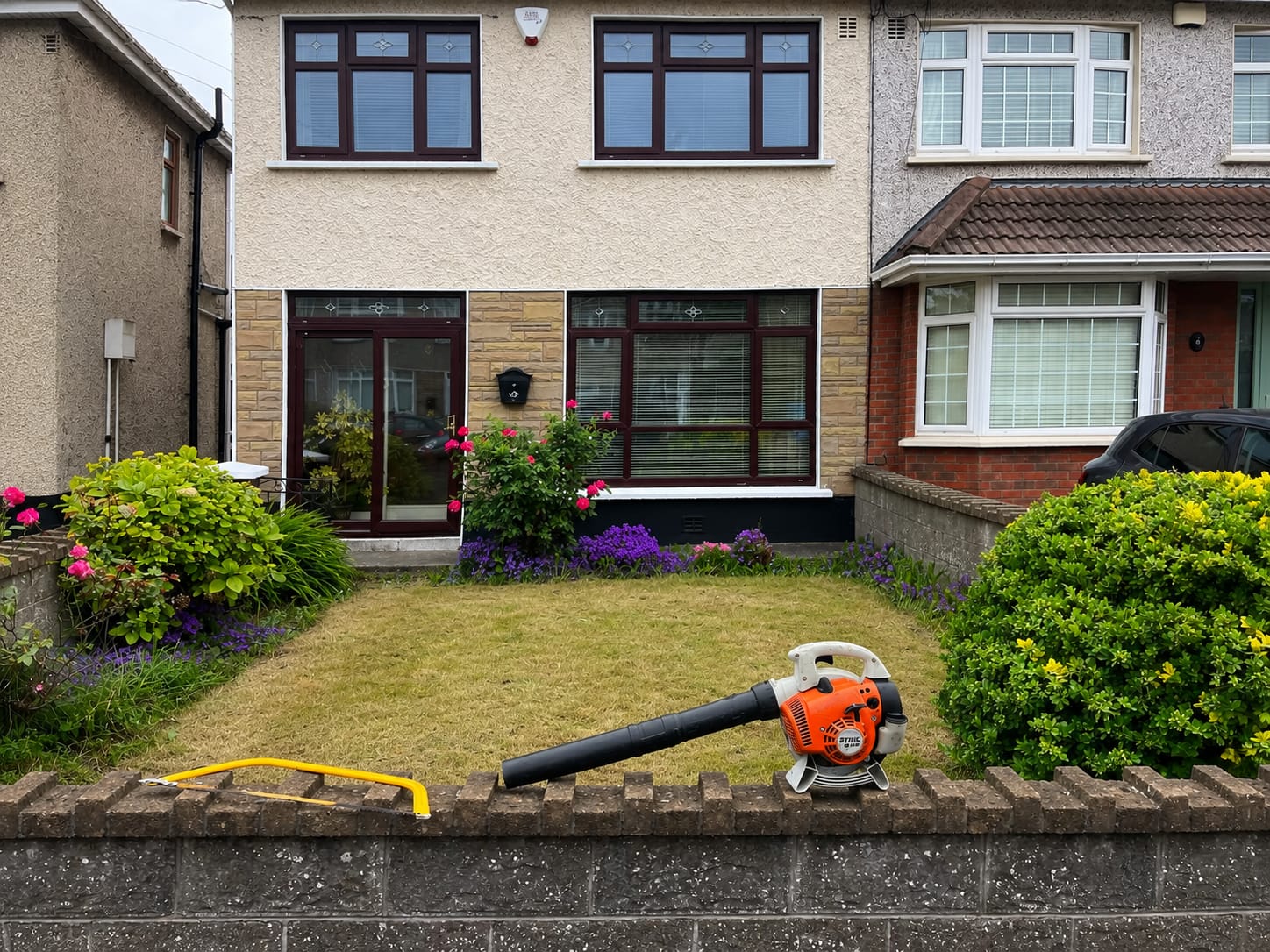
The pattern we see most in these houses is the shade-denial cycle. A homeowner wants a lawn and a colourful border, so they lay grass seed and plant sun-loving bedding in a garden that gets a few hours of light at best. It looks acceptable for one season. By the second year the grass is thin and mossy, the bedding has gone leggy reaching for light, and the conclusion is that the garden is a lost cause.
It is not a lost cause, it is a mismatch. The same garden planted for shade, with the right surface underfoot and greenery taken up the walls, becomes a genuinely lovely space and needs less work, not more. Shaded city gardens done properly are calm, green and low maintenance. Shaded city gardens fighting their own conditions are a permanent losing battle.
North City Garden Checklist
- Time how many hours of direct sun the garden really gets before choosing plants
- Check ivy on any old wall, especially near gutters, eaves and mortar joints
- Confirm how waste will leave the property and that it is in the quote
- Use the walls for greenery in narrow gardens
- Have mature trees assessed before they outgrow the space
- Keep pressure low on period brick and original paving
Areas We Cover
We work across Drumcondra, Glasnevin, Phibsborough, Santry, Whitehall, Beaumont, Marino and Fairview, along with the coastal north side and our established south and west Dublin areas. If your road is nearby but not listed, just ask.
Key Takeaways
- North city gardens are long, narrow, walled and shaded, and design for those conditions rather than against them.
- No rear access is the biggest practical factor in cost and timing, so confirm waste removal is included.
- Old brick and lime mortar need careful ivy removal and low-pressure washing.
- Walls are your growing space when floor area is scarce.
- Mature trees are assets worth managing, with a clear line on what needs a certified arborist.
Related reading: Small Garden Ideas in Dublin · Ivy Removal in Dublin · Garden Waste Removal in Dublin
Looking for a Gardener in Drumcondra, Glasnevin or Phibsborough?
WhatsApp Primegardener.ie a few photos of your garden and let us know whether there is side access. We will come back with a fixed price that includes carrying every bag out and taking it away. Tidy-ups, hedges, ivy, trees and regular maintenance across the north city.
Get a north city quoteFrequently Asked Questions
Do you cover Drumcondra, Glasnevin and Phibsborough?
Yes, along with Santry, Whitehall, Beaumont, Marino and Fairview, plus the coastal north side and our south and west Dublin areas. Send your address on WhatsApp and we will confirm right away.
My garden has no side access. Is that a problem?
Not at all, it is normal in these houses and we work around it constantly. Waste is bagged and carried out through the house with floors protected. The important thing is that it is factored into the quote from the start, which it always is with us.
What actually grows in a shaded walled garden?
More than most people expect: ferns, hostas, hydrangeas, climbing hydrangea, skimmia, sarcococca, ivy and many others. Shade planting can be lush and layered. What does not work is sun-loving bedding and standard lawn grass in three hours of light.
Will removing ivy damage my old brick wall?
Not if it is done in the right order. Cutting the stems at the base and letting the growth die before peeling it away protects the surface. Pulling live ivy off period brick is what takes mortar and brick face with it.
Can you power wash original paths and brick?
Yes, at appropriate pressure. Period surfaces need a lower setting and more care than modern concrete, because high pressure erodes soft brick and strips out mortar joints. We assess the surface before choosing the approach.
How much does a gardener cost in the north city?
Garden size and condition matter as always, and access is a genuine factor here because carrying waste through a house takes time. Send photos on WhatsApp for a fixed price, and see our Dublin gardener cost guide for ballpark figures.