
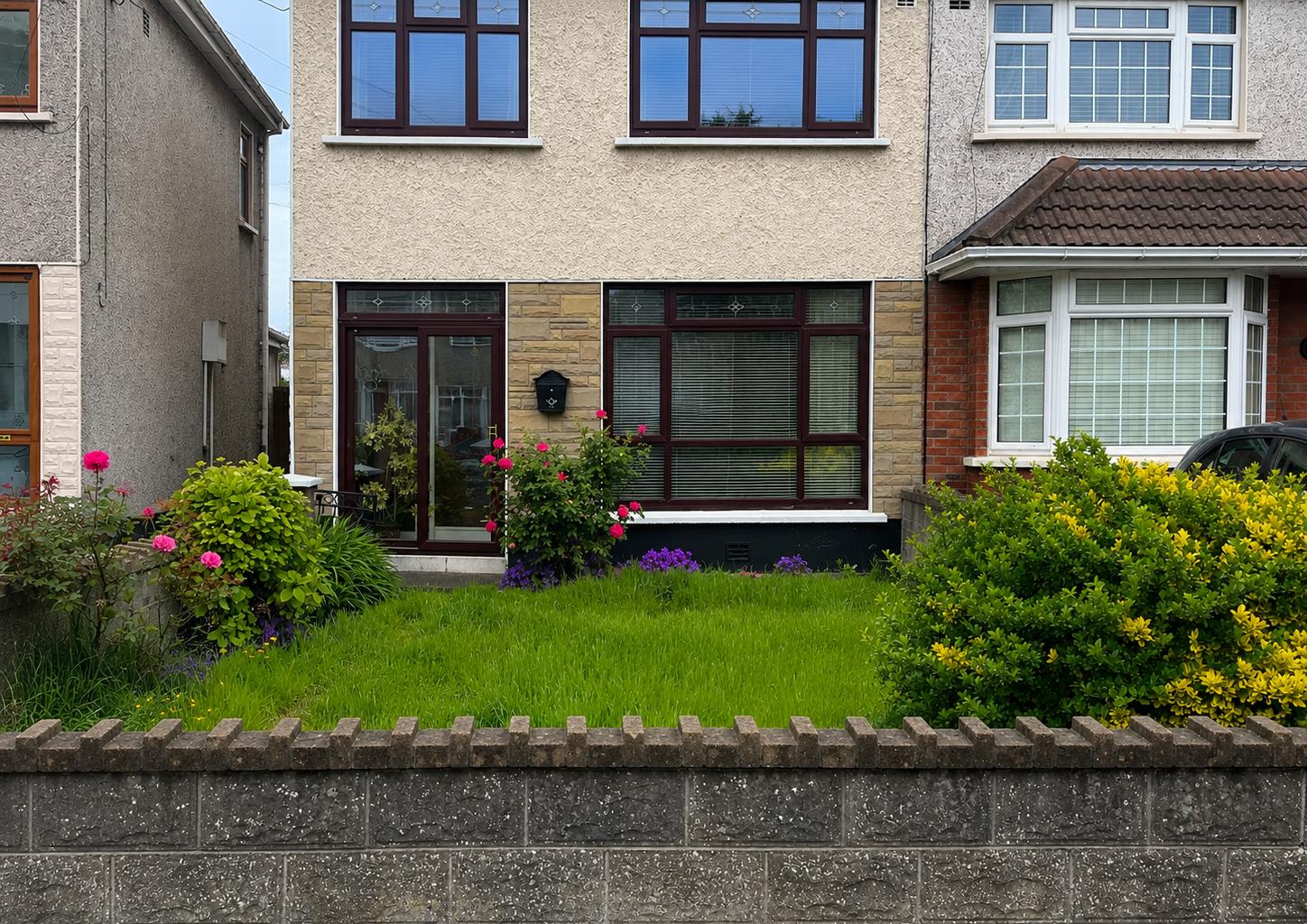
Mowing the lawn is the one garden job almost everybody understands, which is exactly why it is the one most often done badly. A lawn mowing service in Dublin can mean two very different things: someone who arrives, drops the blade to the lowest setting, blasts through in fifteen minutes and leaves the clippings where they fell, or someone who cuts at the right height, edges the borders, and takes every scrap away. Both will call it "grass cutting". Only one leaves you with a lawn that improves rather than declines.
Because Dublin grass grows for roughly ten months of the year, the difference compounds fast. Two seasons of bad cutting produces a thin, scalped, moss-invaded lawn that then needs real money spending on it. Two seasons of good cutting produces a lawn that mostly looks after itself.
This guide is the practical version: how often Dublin lawns actually need cutting, what should be in the price, the mowing mistakes that quietly ruin grass, and how regular visits compare with calling someone when it gets embarrassing.
How Often Does Grass Need Cutting in Dublin?
Our mild, wet climate means a longer mowing season than most of Europe. A realistic Dublin schedule looks like this:
- March to April: every ten to fourteen days as growth wakes up.
- May to August: weekly, and genuinely weekly. This is peak growth, and a warm wet fortnight in June can put a lawn beyond a domestic mower's comfort zone.
- September to October: back to every ten to fourteen days.
- November onward: occasional cuts while growth continues, which in Dublin is often into late November, then stop.
Most of our clients settle on fortnightly visits year-round as the sweet spot for price and appearance, with weekly available through the summer peak for people who want a sharper look.
What Should Be Included in a Grass Cutting Visit
When comparing a lawn mowing service near you, this is the list to check against:
- Cutting at the correct height. Never removing more than a third of the grass height in one pass. Scalped grass yellows, stresses and opens the door to weeds and moss.
- Sharp blades. Blunt blades tear grass instead of slicing it, leaving a ragged pale finish that invites disease. You can see the difference two days later.
- Edges and borders trimmed. Crisp edges are eighty percent of why a mown lawn looks professional rather than merely shorter.
- Clippings collected and removed. Left in heaps, clippings smother the grass beneath and build the thatch layer that moss loves. Every visit we do includes taking the clippings away, which is why our waste removal guide matters more than people expect.
- A quick look at the lawn's health. A good gardener notices spreading moss, a drainage problem or a weed taking hold, and tells you while it is still cheap to fix.
Mowing Mistakes That Slowly Kill a Dublin Lawn
- Cutting too short. The single most common error. Longer grass shades out weeds, holds moisture and roots deeper. Scalping does the opposite of all three.
- Mowing wet grass. Tempting in Ireland, and it tears rather than cuts, clogs the mower and compacts soft ground.
- Cutting the same direction every time. Grass leans the way it is repeatedly cut. Alternating direction keeps it upright and even.
- Leaving heavy clippings behind. A light scatter in dry weather is fine and feeds the lawn. Wet heaps are a moss starter kit.
- Skipping the shoulder seasons. Grass growing in November that never gets cut goes into winter long, flops, and rots. The autumn side of this is covered in our winter preparation guide.
What a Lawn Mowing Service Costs in Dublin
Honest ballparks: a typical Dublin garden runs roughly €30 to €60 per visit including edging and clippings removal, with larger suburban lawns higher. Regular clients pay less per visit than one-off bookings, for the simple reason that a lawn cut every fortnight is quick and a lawn cut twice a year is a battle.
Be careful comparing a low quote against a fair one. If clippings removal is extra, or the visit is fifteen minutes with a blunt blade on the lowest setting, the "cheap" cut is costing you lawn quality that you will eventually pay to restore. The full pricing picture is in our gardener cost guide.
Regular Visits or Call Us When It Gets Bad?
Both work, and one is much better value. A regular slot means the lawn is never out of control, each visit is short, and the price per visit reflects that. Waiting until the grass is knee-high means a harder job, a staged cut (long grass cannot safely be taken down in one pass), and a stressed lawn that takes weeks to recover. If your grass has already got away from you, that is a tidy-up rather than a mow, and our garden tidy-up guide explains what that involves.
Case Study: The Fortnightly Slot in Rathmines
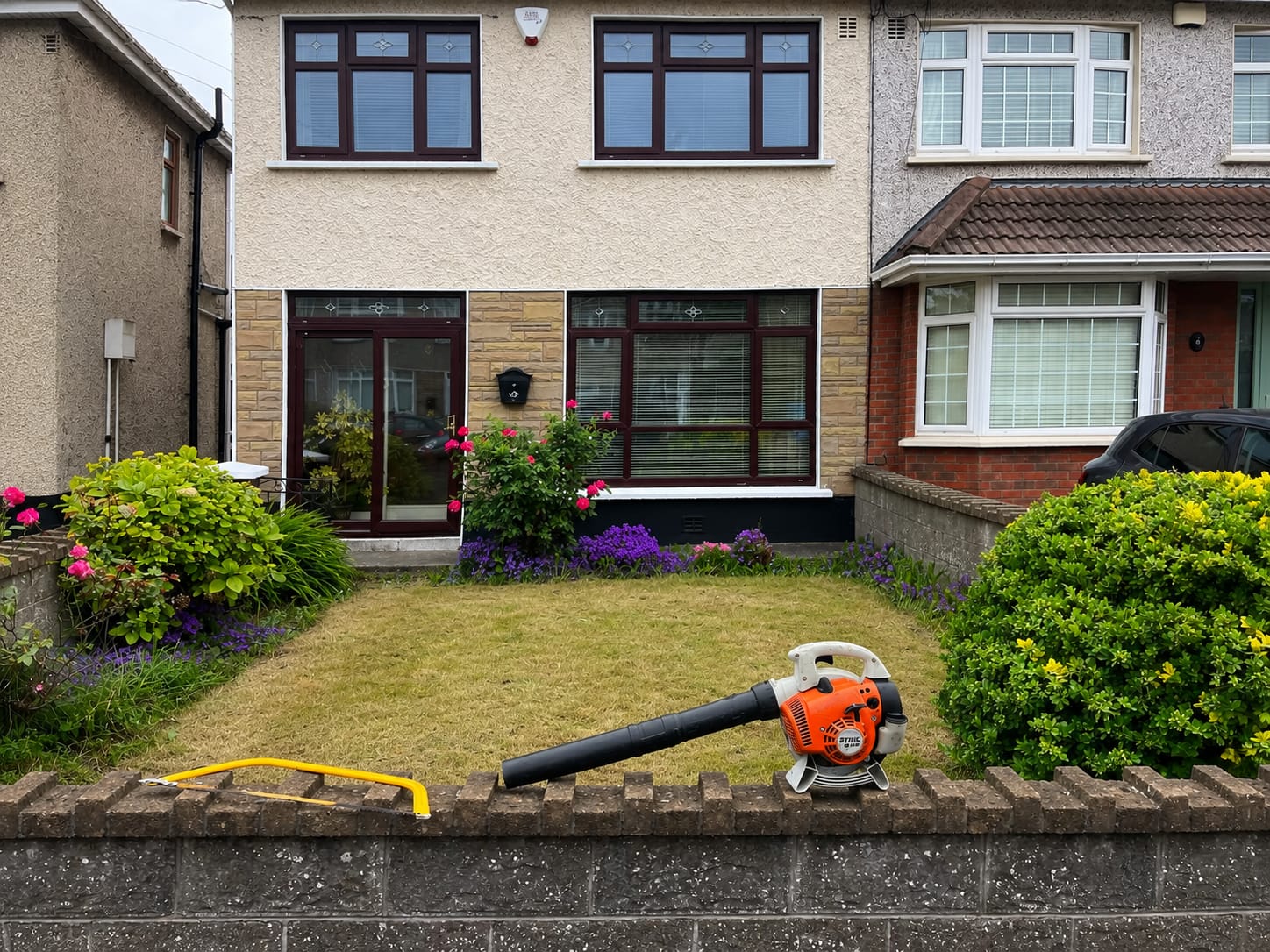
A client in Rathmines had been using whoever was cheapest, cut by cut, for two summers. The lawn told the story: pale, scalped, thin at the edges, and moss spreading in from the shaded end where clippings had been left to mat down.
We started with a repair rather than a mow: raked out the moss, fed the lawn, and let it grow slightly longer for a few weeks. Then a fortnightly slot at a sensible cutting height with edges trimmed and clippings removed every visit. By the following summer it was the same lawn in name only, and it now costs less per visit than the emergency cuts used to.
"I thought grass cutting was grass cutting. It genuinely is not."
Where a lawn is too far gone for mowing alone to fix, the recovery routine is in our lawn care guide.
Checklist: Questions to Ask a Lawn Mowing Service
- Are clippings collected and taken away, or left on the lawn?
- What cutting height do you use, and do you adjust it seasonally?
- Are edges and borders trimmed as part of the visit?
- Is the price per visit, and does it change between summer and winter?
- What happens if rain forces a missed visit?
- Are you insured for work at my property?
Key Takeaways
- Dublin grass needs weekly cutting from May to August and fortnightly either side.
- A proper visit means correct height, sharp blades, trimmed edges and clippings removed.
- Never let more than a third of the grass height come off in one cut.
- Expect roughly €30 to €60 per visit for a typical Dublin lawn, waste included.
- Regular slots cost less per visit and produce a visibly better lawn than emergency cuts.
Related reading: Lawn Care in Dublin · Garden Tidy Up Services in Dublin · How Much Does a Gardener Cost in Dublin?
Want Your Grass Handled, Properly, Every Fortnight?
WhatsApp Primegardener.ie a photo of your lawn and we will send a fixed price per visit, edges and clippings removal included. Weekly, fortnightly or monthly slots across Dublin, no long lock-in.
Get a mowing price on WhatsAppFrequently Asked Questions
How much does lawn mowing cost in Dublin?
Roughly €30 to €60 per visit for a typical Dublin garden, including edging and clippings removal, with larger lawns priced higher. Regular visits cost less per visit than one-offs. Send a photo on WhatsApp for a fixed price.
How often should my grass be cut?
Weekly from May to August, every ten to fourteen days in spring and autumn, and occasionally into late November while growth continues. Fortnightly year-round is the most popular compromise.
Do you take the grass clippings away?
Always, as part of every visit. Left in heaps, clippings smother grass and feed the thatch layer that moss thrives in, so removal is not an optional extra for us.
Can you cut grass that has got very long?
Yes, but not in one pass. Very long grass is reduced in stages over a short period, because taking it straight down to normal height can kill the lawn underneath. If it is badly overgrown, it is really a tidy-up job rather than a mow.
What happens if it rains on my scheduled day?
We reschedule, and we tell you. Cutting saturated grass damages both the lawn and the finish, so a short delay is always the better call in Irish weather.
Do I need to be home for the visit?
No, as long as we can access the garden. Most clients are out at work; we message when the job is done.