
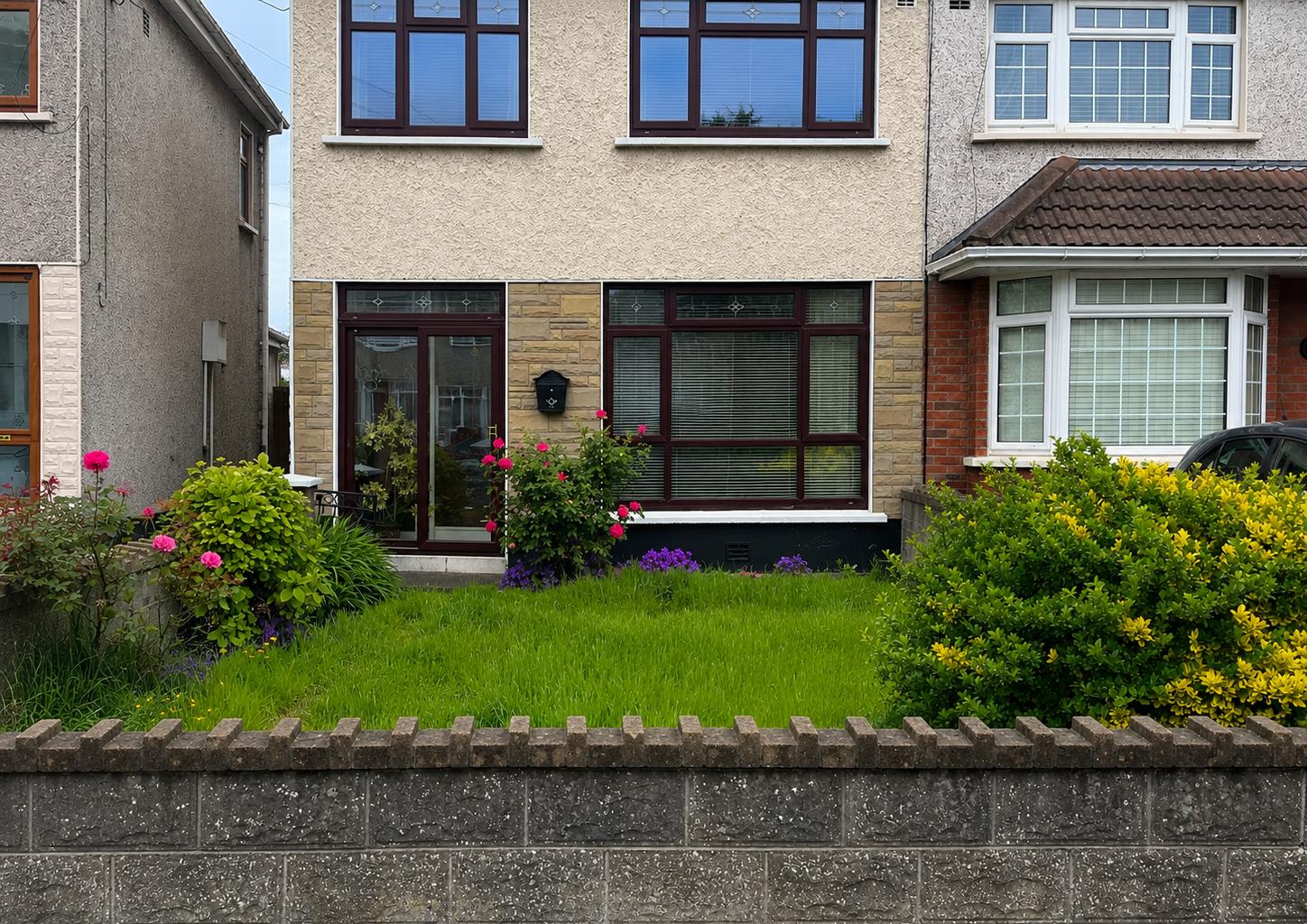
You pull them on Saturday. By the following weekend, they're back - dandelions through the lawn, moss creeping over the shady end, something stubborn pushing up between every paving slab on the driveway. If that sounds familiar, you're dealing with the reality of gardening in Ireland: our mild, wet climate is close to perfect for weeds, which means weed control in Dublin is never a one-off job - it's a system.
The frustrating part is that most DIY weed control fails not because people don't try hard enough, but because the treatment doesn't match the weed. Pulling the top off a dandelion leaves a taproot that regrows within weeks. Blasting a lawn with the wrong product kills the grass along with the weeds. And moss - the number one complaint in shaded Dublin gardens - isn't even a weed problem at all; it's a drainage and light problem wearing a weed costume.
This guide explains what's actually growing in your garden, what works against it (safely, especially if you have kids or pets), and when it's worth stepping back and asking a bigger question: should this patch of ground be a natural lawn at all, or would artificial grass suit your life better? We'll cover both honestly - at Primegardener.ie we help clients down each path, and the right answer depends on your garden, not ours.
Know Your Enemy: Common Weeds in Dublin Gardens
Effective garden weed control starts with identifying what you're up against, because different weeds need different tactics:
Broadleaf weeds
- Dandelions, docks and plantains: deep taproots that regrow from any fragment left behind. Pulling only works if you get the whole root; otherwise they need targeted treatment.
- Daisies and clover: low-growing and mat-forming - they survive mowing because they sit below the blade.
Grass weeds
- Annual meadow grass and coarse grasses: the hardest to treat, because anything that kills them tends to kill your lawn too. Control here is mostly cultural - mowing habits, feeding, and overseeding to crowd them out.
Creeping and spreading weeds
- Creeping buttercup and ground elder: spread by runners and underground stems; every fragment left in the soil becomes a new plant. These defeat casual weeding and usually need a season-long plan.
- Bindweed: the climber that strangles beds and fences - persistent roots that can take repeated treatments over a full year.
- Moss: not technically a weed, but the biggest lawn complaint in Dublin. It thrives where drainage is poor, soil is compacted, and light is low - kill it without fixing those, and it returns every winter.
DIY vs Professional Weed Control: An Honest Comparison
DIY weed control
Pros: cheap to start, satisfying, fine for light weeding in beds and pots.
Cons: shop products are often the wrong tool (a non-selective weed killer on a lawn kills the lawn), timing is everything and easy to get wrong, taproots and creeping weeds regrow from fragments, and repeated failed attempts often cost more than doing it properly once.
Professional weed control
Pros: correct identification first, then the right treatment - for lawns that means a selective herbicide, which is simply a treatment that targets broadleaf weeds while leaving grass unharmed. Professionals also treat at the right time of year, at the right dose, and combine treatment with the cultural fixes (aeration, feeding, overseeding) that stop weeds coming back.
Cons: costs more than a bottle from the garden centre - but it works, and a lawn weed treatment in Dublin done properly in spring and autumn usually costs less than years of failed DIY attempts.
Safety first: children, pets and the wider garden
This is where professional care earns its keep. Done carelessly, weed treatments can harm far more than weeds:
- Kids and pets: treated areas need to be kept clear until fully dry (typically a few hours). We tell clients exactly when the garden is safe to use again, and where possible we use pet-friendly weed control approaches - manual removal, thermal treatment, and targeted spot-treatment rather than blanket spraying.
- Nearby plants: spray drift on a breezy day kills flower beds as happily as weeds. Calm conditions and shielded application matter.
- Water run-off: treating a driveway just before rain washes product into drains and, eventually, rivers. Timing around Dublin's weather is a genuine skill.
As part of our eco-friendly approach at Primegardener.ie, chemicals are the last resort, not the first: we favour manual weed removal in beds, correct mowing and feeding to help lawns out-compete weeds naturally, and targeted treatment only where it's genuinely needed - including driveway weed control, where spot treatment beats blanket spraying every time.
Two Roads Back to a Garden You Can Enjoy
When a lawn is more weed and moss than grass, there are two honest options - and which is right depends on how you want to use your garden.
Option 1: Restore a natural lawn with a weed control programme
A typical restoration plan for a weedy Dublin lawn looks like this:
- Assessment: identify the weeds, the moss triggers (shade, drainage, compaction), and the state of the underlying grass.
- Treatment: selective treatment of broadleaf weeds and moss at the right point in the season.
- Repair: scarify out the dead moss and thatch, aerate the compacted clay, overseed the thin patches.
- Maintain: regular mowing at the right height and seasonal feeding - a dense, healthy lawn is itself the best weed control there is.
Best for: people who love a real lawn - the feel, the look, the wildlife - and are happy with (or happy to hire) ongoing maintenance.
Option 2: Artificial grass for an ultra-low-maintenance garden
Sometimes the honest answer is that a natural lawn will always struggle: heavily shaded gardens, tiny north-facing yards, gardens hammered daily by dogs and kids, or owners who simply don't want the upkeep. That's where artificial grass in Dublin gardens has become genuinely popular, and modern synthetic lawn turf is a world away from the fake-looking stuff of a decade ago.
The benefits:
- Green all year round, whatever the weather - no mud in winter, no patchy grass in summer
- Near-zero maintenance: no mowing, no feeding, no weed treatments
- Excellent artificial lawn for pets - durable, easy to rinse clean, no dug-up holes or muddy paws
- Especially effective for small gardens and shaded yards where real grass never thrives
The honest drawbacks:
- Higher upfront cost than lawn restoration (though little ongoing cost after)
- It can get hot underfoot in strong summer sun
- It doesn't support soil life and pollinators the way a real lawn does - we often suggest keeping planted borders around it to give wildlife a home
- It's not maintenance-free: it needs occasional brushing to keep the pile upright, debris removal, and a rinse now and then
Installation matters more than the grass itself. Fake grass landscaping laid straight over an old lawn fails - weeds push through and the surface goes lumpy. A proper install means excavating the old turf, building a compacted base, laying a weed membrane, and only then fitting the turf. Cheap installs skip those steps, which is why they look terrible in two years.
Before and after: the Crumlin garden that fought back
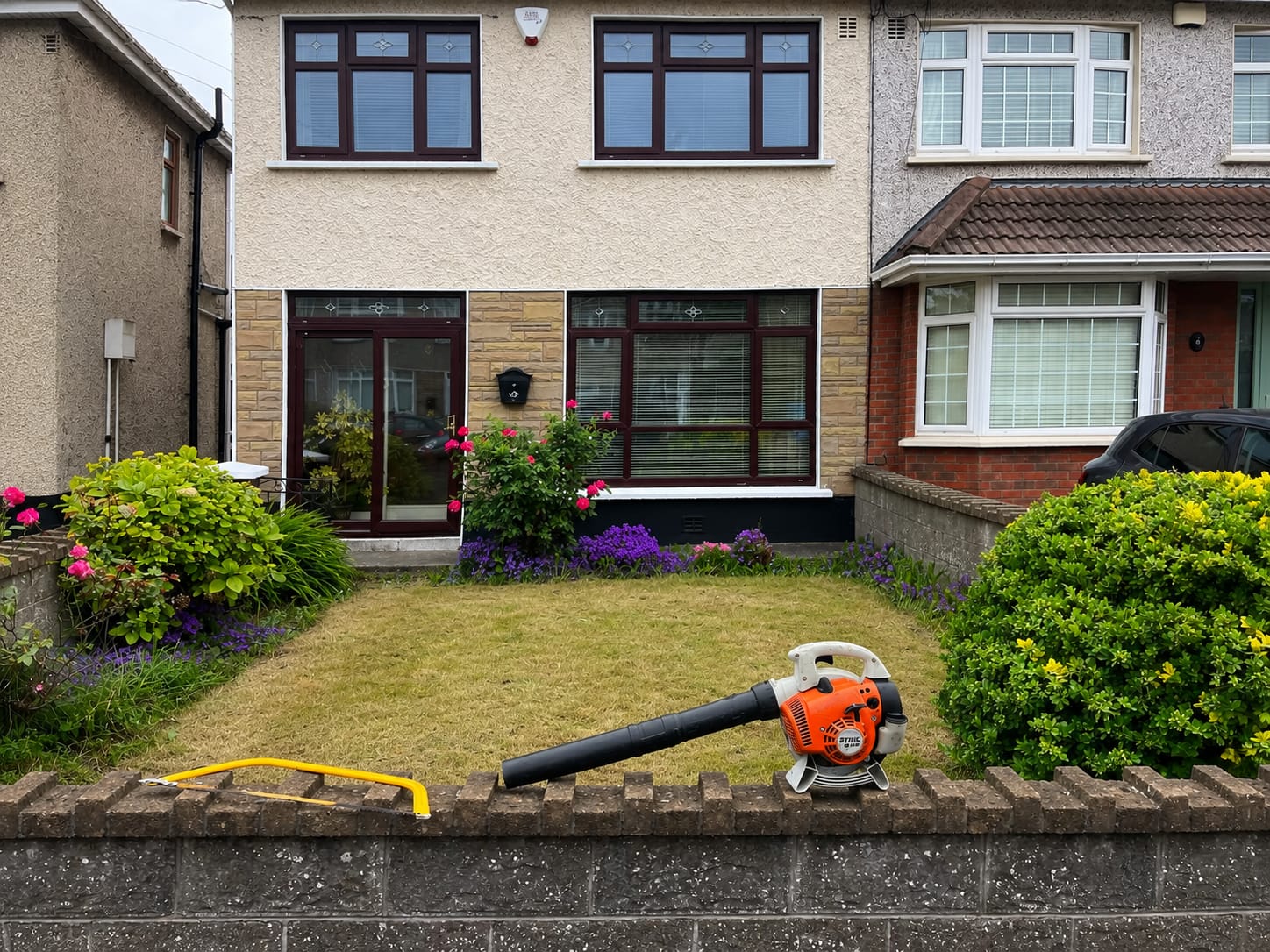
A family in Crumlin came to us last spring with a back lawn that was, by their own count, "about 70% weeds and moss, 30% grass" - and a young dog making it worse by the week. They assumed artificial grass was the only option and asked us to quote for it.
We quoted for both options, and after talking it through they chose to try restoring the real lawn first: weed and moss treatment in April, scarifying and overseeding in early May, then a fortnightly mow-and-feed plan. By July the lawn was dense, green, and holding its own against both the weeds and the dog.
"We were ready to spend thousands on fake grass. Turns out the real one just needed someone who knew what they were doing."
Other clients - particularly with small, shaded city gardens - go the other way, and love the result just as much. That's the point: it's about matching the solution to the garden and the household, not selling one answer to everyone.
Decision Guide: Weed Control or Artificial Grass? 6 Questions to Ask Yourself
- Does your lawn get at least a few hours of direct sun? (Deep shade favours artificial.)
- Do you enjoy - or mind paying for - regular lawn maintenance? (No upkeep at all favours artificial.)
- Is at least a third of your existing lawn still healthy grass? (If yes, restoration is very achievable.)
- Do pets use the garden hard every day? (Heavy daily wear favours artificial; moderate use is fine for real grass.)
- Is supporting wildlife and pollinators important to you? (A living lawn wins here.)
- Are you thinking long-term value or lowest upfront cost? (Weed control is cheaper now; artificial costs more upfront but little after.)
Mostly leaning one way? That's probably your answer. Split down the middle? That's exactly what a site visit is for.
Quick Summary
- Dublin's mild, wet climate means weed control is an ongoing system, not a one-off job.
- Match the treatment to the weed - taproots, creepers, and moss all need different approaches, and moss won't stay gone until drainage and light are addressed.
- Safe weed removal matters: keep kids and pets off treated areas until dry, protect neighbouring plants, and never treat before rain.
- A dense, healthy, well-fed lawn is the best long-term weed prevention there is.
- Artificial grass is a legitimate option for shaded, small, or hard-worn gardens - but only with proper installation over a weed membrane and compacted base.
Not Sure Which Way to Go? Ask Us to Look
WhatsApp a few photos of your lawn or garden to Primegardener.ie and we'll tell you honestly what we'd do - a weed control and lawn restoration plan, an artificial grass solution, or a mix of both. Clear pricing, eco-friendly methods, and all the waste taken away.
Get a free garden assessmentRelated reading: Artificial Grass Installation in Dublin · Lawn Care in Dublin · Eco-Friendly Gardening in Dublin
Frequently Asked Questions
Is professional weed control safe for pets and children?
Yes, when done properly. We use targeted, minimal treatments, favour manual and pet-friendly methods where practical, and tell you exactly how long to keep kids and pets off treated areas (usually just until the treatment has dried). Blanket spraying an entire garden is almost never necessary.
How long does artificial grass last in Irish weather?
Good-quality synthetic turf, properly installed, typically lasts 15–20 years in Ireland. Rain isn't the enemy - poor installation is. A correct base and drainage layer matter far more than the weather.
Can artificial grass be installed over an existing lawn?
It shouldn't be. Laying turf straight over grass leads to lumps, drainage problems and weeds growing through within a season or two. A proper install removes the old lawn, builds a compacted stone base, and lays a weed membrane before the turf goes down.
What's the cost difference between ongoing weed control and artificial grass?
Weed control and lawn restoration costs much less upfront, with a modest ongoing maintenance cost. Artificial grass costs significantly more to install but very little after. Over roughly a decade the totals often converge - so the real question is which garden you'd rather live with, not just the price tag.
Why does moss keep coming back to my lawn every winter?
Because moss is a symptom, not the disease. It thrives on compacted, poorly drained, shaded ground - very common on Dublin's clay soils. Killing the moss without aerating the soil and improving conditions guarantees it returns. Treat the cause and the moss stays gone.
How quickly can you treat a weed-infested garden?
Send us photos on WhatsApp and we'll usually price the job the same day. Most weed control and clean-up jobs can be scheduled within a week or two, and lawn restoration plans are timed to the season for best results.