
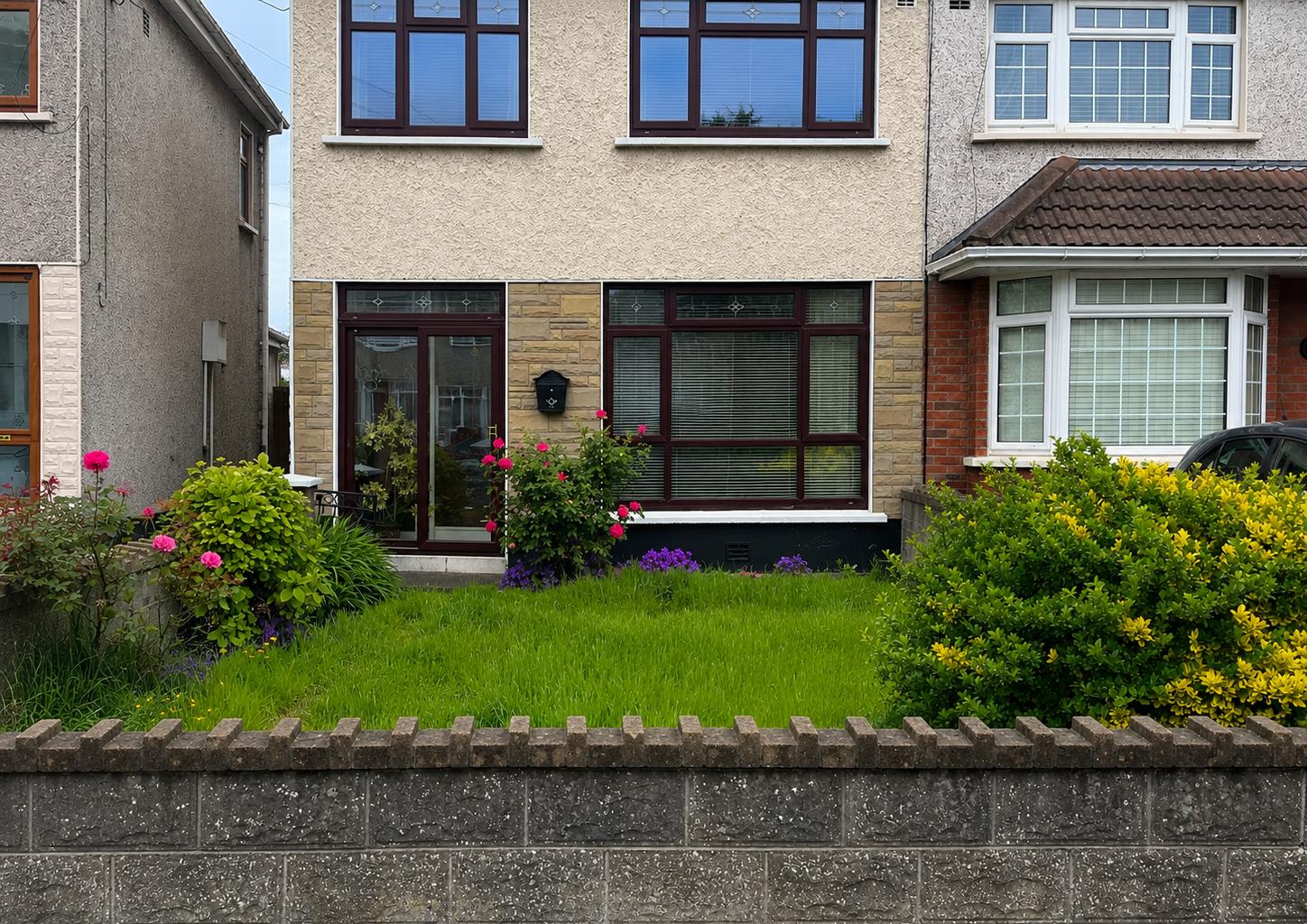
After years of working in gardens across this city, we can tell you something reassuring: almost every struggling garden is struggling for the same handful of reasons. The garden problems Dublin homeowners bring to us, from waterlogged lawns in Clondalkin to moss-choked grass in Terenure to hopeless shade in city-centre courtyards, come down to a short list of causes. And every one of them has a fix.
The trick is diagnosing the cause instead of fighting the symptom. Killing moss without fixing drainage means the moss returns every winter. Re-seeding a lawn on compacted clay means the new grass fails like the old grass did. Cutting back an overgrown hedge the wrong way means bare patches that never recover.
Here are the eight problems we see most, what causes each one, what you can genuinely do yourself, and when calling a local gardener is the faster and cheaper path. Keep this page bookmarked: your garden will meet most of these problems eventually, and now you'll know what you're looking at.
1. Waterlogged Lawns and Poor Drainage
The cause: Much of Dublin sits on heavy clay soil that holds water, and years of foot traffic compact it further until rain has nowhere to go.
DIY help: Spike the lawn with a garden fork in autumn and brush in coarse sand. Avoid walking on saturated grass, which makes compaction worse.
When to call us: If puddles sit for days after rain, hand spiking will not be enough. We use hollow-tine aeration to pull plugs of soil out and let the ground breathe, and for the worst cases we can improve levels and drainage properly. A waterlogged garden can almost always be fixed; it is a groundwork problem, not a curse.
2. Moss Taking Over the Lawn
The cause: Moss is not bad luck. It thrives on exactly three things: damp, compaction and shade, and Dublin winters supply all three.
DIY help: Scarify (rake out) the moss in spring, then feed the grass so it fills the gaps before the moss does.
When to call us: If moss returns every year, the conditions need changing, not just the moss removing. Aeration, shade management and the right seed mix break the cycle. Our lawn care guide covers the full routine.
3. Weeds in Lawns, Beds and Driveways
The cause: Ireland's mild, wet climate grows weeds ten months of the year, and every bare patch of soil is an invitation.
DIY help: Hand weed little and often, mulch beds to smother seedlings, and never let weeds set seed.
When to call us: Taproot weeds, creeping weeds and driveway invasions defeat casual weeding because they regrow from fragments. We match the treatment to the weed, safely around kids and pets. The full breakdown is in our weed control guide.
4. Deep Shade Where Nothing Grows
The cause: House walls, extensions and mature trees leave many Dublin gardens with only a few hours of direct light.
DIY help: Stop fighting it. Plant for shade (ferns, hostas, hydrangeas) instead of watching sun-lovers die, and consider lifting the crown of overhanging trees to let more light through.
When to call us: Where grass simply cannot survive, we redesign the space to suit the light: shade planting, quality surfaces, or artificial grass that stays green without a single ray of direct sun. Shaded gardens can be the most atmospheric spaces of all when designed for what they are.
5. Overgrown or Damaged Hedges
The cause: A Dublin hedge can grow half a metre in one wet summer, and a year or two of missed trims turns a neat boundary into a light-blocking wall.
DIY help: Light annual trims, always keeping the hedge slightly narrower at the top so the base stays green, and never cutting during active bird nesting without checking first.
When to call us: Serious reductions need staging over seasons or the hedge may never recover, and tall hedges are genuinely dangerous DIY. Our hedge trimming guide covers species, timing and when a hedge is worth saving.
6. Compacted, Lifeless Soil
The cause: Clay soil plus foot traffic plus builder's rubble (very common in newer estates around Swords and Clondalkin) equals ground that plants cannot root into.
DIY help: Work in organic matter (compost, well-rotted manure) every autumn, and mulch beds so worms do the digging for you.
When to call us: Beds that have failed repeatedly usually need proper soil improvement in one go: breaking the pan, removing rubble, and rebuilding with quality topsoil and compost. It is a one-time fix that changes everything planted afterwards.
7. Neglected, Overwhelming Beds
The cause: Life. A busy year or two and beds disappear under bindweed, brambles and self-sown sycamores.
DIY help: Reclaim one small section at a time, clear it completely, then mulch heavily so it stays clear while you move to the next.
When to call us: A full garden clean-up compresses months of weekends into a day or two, with every scrap of green waste taken away. Then a simple maintenance plan keeps it from sliding back. That reset-then-maintain pattern is the heart of our garden maintenance approach.
8. Garden Pests: Slugs, Vine Weevil and Friends
The cause: Mild wet weather is paradise for slugs and snails, and container-heavy gardens are prone to vine weevil grubs eating roots unseen.
DIY help: Encourage the predators: birds, hedgehogs and frogs eat more slugs than pellets ever will. Wool pellets and copper bands protect prized plants, and checking pots in autumn catches vine weevil early.
When to call us: Persistent damage often has a hidden cause, and choosing pest-resistant planting is the long-term fix. We favour wildlife-safe approaches first; see our eco-friendly gardening guide for why that matters.
Case Study: Four Problems, One Garden in Inchicore
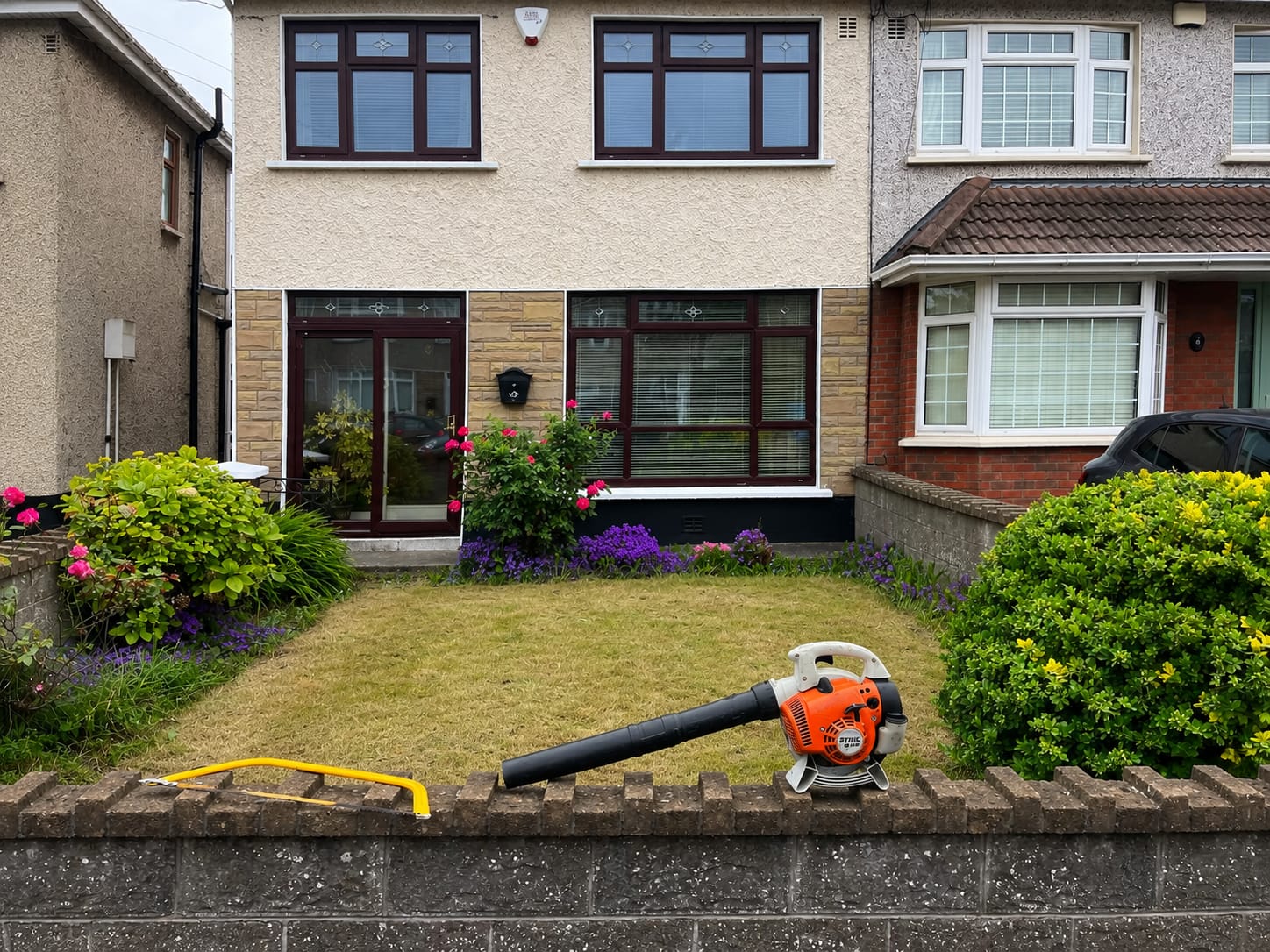
A couple in Inchicore bought a house whose garden had every classic problem at once: a lawn that flooded each winter, moss instead of grass in the shaded half, a leylandii hedge grown three metres tall, and beds lost to bindweed. Three quotes had told them to pave the lot.
We took it in stages across one season. Late winter: the hedge came down in height by stages to a dense two-metre screen. Spring: hollow-tine aeration and topdressing fixed the drainage, and the lawn was overseeded with a shade-tolerant mix. Through summer: the beds were cleared, soil improved, mulched and replanted with tough, pollinator-friendly species. A fortnightly visit now keeps all of it in shape.
"Every other quote was for decking or paving. Prime Gardener was the only one who said the garden itself could be saved."
Key Takeaways
- Nearly all Dublin garden problems trace back to clay soil, water, shade or neglect, and all four are fixable.
- Treat causes, not symptoms: moss, weeds and failed lawns return until the underlying conditions change.
- Small DIY habits (mulching, aeration, little-and-often weeding) prevent most problems from taking hold.
- The expensive-looking problems, like waterlogging and overgrown hedges, are often routine work for a professional with the right equipment.
- A one-off rescue followed by light regular maintenance is cheaper than repeated crisis clean-ups.
Related reading: Lawn Care in Dublin · Weed Control in Dublin · Power Washing in Dublin · Garden Clearance in Dublin
Tell Us What's Wrong With Your Garden
Whatever the problem, we've almost certainly fixed it in a garden near you. WhatsApp Primegardener.ie a few photos and we'll tell you what's causing it, what it takes to fix, and exactly what that costs. Honest advice, free of charge.
Get a free diagnosis on WhatsAppFrequently Asked Questions
Can my waterlogged garden be fixed?
Almost always, yes. Most Dublin waterlogging is compacted clay rather than a true high water table, and aeration, topdressing and level corrections solve it. Severe cases may need drainage work, and we'll tell you honestly which yours is after seeing it.
What can I do with a very shady garden?
Design for the shade instead of against it: shade-loving planting, lighter surfaces, and artificial grass where a lawn is wanted. Shaded gardens done well feel like calm green retreats. What fails is trying to grow sun-loving plants and standard lawn grass in them.
Do you handle garden pests?
Yes, with wildlife-safe methods first. Most pest problems respond to better plant choices, garden hygiene and encouraging natural predators, and we advise honestly when a problem needs specialist treatment.
My new-build garden is just builder's rubble under thin turf. Is that fixable?
Very common in newer estates, and yes. We remove the worst of the rubble, decompact the ground, and rebuild the growing layer with proper topsoil. Everything planted afterwards behaves differently.
Can you fix several problems in one visit?
Usually the work is staged with the seasons, since hedges, lawns and beds each have their best timing. We plan the sequence for you so the garden improves visit by visit without wasted effort.