
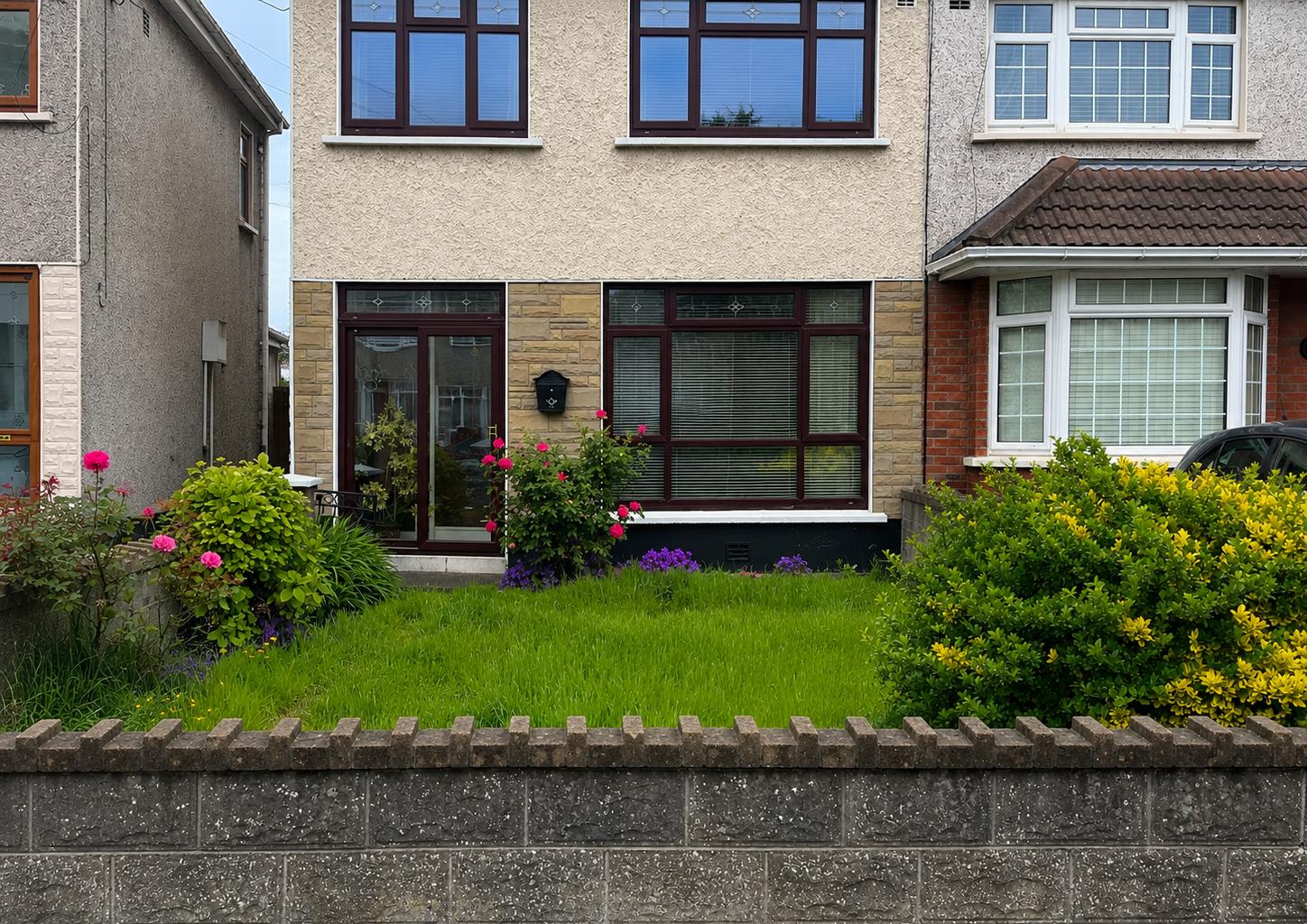
Swords has more new housing than almost anywhere else in the county, and that single fact explains most of what a gardener in Swords gets called about. Across estates like Applewood, Boroimhe and Rivervalley, and in every development that has gone up since, the gardens share a set of problems that have nothing to do with neglect and everything to do with how they were built. Thin turf laid straight over compacted subsoil. Builder's rubble six inches down. A flat rectangle with no shelter, no structure, and a fence the neighbours can see straight over.
The frustrating part for homeowners is that these gardens fail despite genuine effort. People feed the lawn, reseed the bare patches, plant along the fence, and watch it all struggle again by the second summer. It is not bad gardening. It is that nothing can root properly in what is underneath.
The good news is that new-build gardens are the most transformable gardens we work on, because the problem is nearly always one fixable layer of ground rather than years of accumulated mess. This guide covers what is actually wrong under a typical Swords lawn, the order to tackle things in, how to deal with wind on open estates, and what a garden gets you once the groundwork is right.
Why Swords Gardens Behave the Way They Do
- Compacted subsoil. Heavy machinery runs over a site for months during construction. The ground it leaves behind is pressed hard enough that grass roots and rainwater both struggle to get through.
- Buried rubble. Broken block, mortar, plastic and offcuts routinely end up under the finished level. It is the single most common thing we dig out of north county Dublin new-build gardens.
- Almost no topsoil. Developers commonly finish with a thin skim of soil under the turf. Grass needs far more depth than that to survive a dry July or a wet January.
- Exposure. New estates have no mature trees or hedges yet, so wind runs straight across open ground. Young plants take a beating that the same species would shrug off in an established garden.
- Hard family use. Swords skews young, which means kids, dogs, goalposts and trampolines on lawns that were never built to take it.
The Order to Fix a New-Build Garden
Doing these in the wrong order wastes money, because every later step depends on the earlier one:
- Find out what is under there. Dig a test hole. If you hit rubble or ground you cannot push a fork into within a spade's depth, that is your real problem and no amount of feed will fix it.
- Decompact and clear. Break up the pan, take out the rubble, and correct the levels so water runs away from the house rather than pooling mid-lawn.
- Build a proper growing layer. Quality screened topsoil at a real depth. This is the step that decides whether everything above it thrives for twenty years, and it is exactly what our lawn turfing guide covers in detail.
- Lawn: repair, re-turf or go artificial. With good ground beneath, seed and turf both work. Where a small garden takes daily punishment from kids and dogs, artificial grass is often the honest answer.
- Get shelter and screening in early. Hedging planted in year one is doing real work by year three. Choose species that establish fast in exposed ground, as covered in our hedging guide.
- Then design the rest. Patio, beds, planting. Structure and layout thinking is in our landscaping guide.
Wind and Exposure on Open Estates
North county Dublin is flat and open, and newer Swords estates sit without the mature shelter belts older suburbs have. That has practical consequences worth planning around:
- Young trees need staking properly for their first two or three years, and ties need checking annually so they do not cut in.
- Large-leaved plants shred in wind. Smaller, tougher foliage holds up far better on an exposed boundary.
- Fence panels take a hammering. Check posts each autumn before the storm season rather than after it.
- A permeable boundary (hedge or slatted screen) survives wind better than a solid one, because it filters the gust instead of taking the full push.
The Most Common Swords Garden Mistake
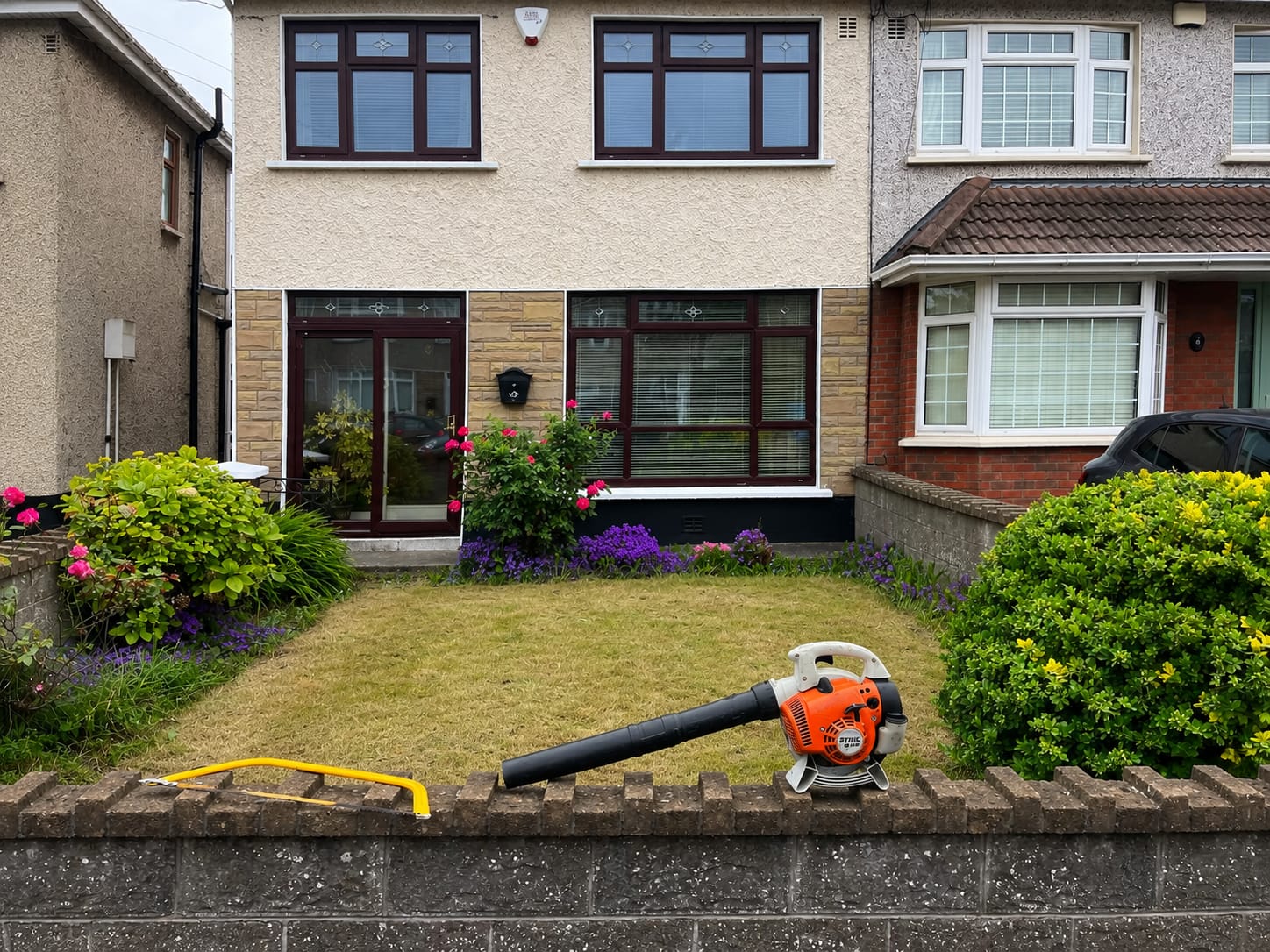
Here is the pattern worth knowing before you spend money on it. A family moves into a new build, the developer's lawn dies back in patches by the second summer, and the response is to buy grass seed and fertiliser. It greens up briefly, then fails in the same places. The following year they try again, sometimes with fresh turf laid straight over the old ground.
Nothing changes, because the problem was never the grass. Seed and turf cannot root into compacted subsoil and rubble, so each new attempt fails exactly like the last one. Fix the ground once, properly, and the next lawn lasts decades. Skip that step and you can reseed every year forever.
If you have reseeded the same patches more than once, stop buying seed and dig a test hole instead. What you find in the first spade's depth will tell you what the garden actually needs.
Areas We Cover Around Swords
We work across Swords and the surrounding north county Dublin areas, including Kinsealy, Donabate, Malahide, Portmarnock and out toward the airport side, as well as our established south and west Dublin rounds. If you are just outside that, ask anyway and we will tell you straight away whether we can help.
New-Build Garden Checklist
- Dig a test hole and check what is under the turf before spending anything
- Fix compaction, rubble and levels before laying lawn or planting
- Build real topsoil depth rather than skimming over the problem
- Plant shelter and screening in year one so it is working by year three
- Stake young trees and check ties every autumn
- Match the lawn to how hard the family will actually use it
Key Takeaways
- Most Swords garden problems are construction legacy, not gardening failure.
- Compacted subsoil, buried rubble and shallow topsoil are the three usual culprits.
- Repeated reseeding without fixing the ground is money spent on the same failure twice.
- Open estates need shelter planting early and proper staking on young trees.
- Get the ground right once and everything planted afterwards behaves completely differently.
Related reading: Lawn Turfing in Dublin · Gardener in Clontarf and North Dublin · 8 Common Dublin Garden Problems
Looking for a Gardener in Swords?
WhatsApp Primegardener.ie a couple of photos of your garden and your estate, and we will come back the same day with an honest assessment and a fixed price. New-build ground works, lawns, hedging and regular maintenance across Swords and north county Dublin.
Get a Swords quote on WhatsAppFrequently Asked Questions
Do you cover Swords and north county Dublin?
Yes. We work across Swords, Kinsealy, Donabate, Malahide and Portmarnock alongside our south and west Dublin areas. Send us your address on WhatsApp and we will confirm straight away.
Why does my new-build lawn keep dying in the same spots?
Almost always because of what is underneath: compacted subsoil, buried rubble, or too little topsoil for roots to work with. Grass cannot fix a ground problem, so reseeding the same patch repeats the same failure. Dig a test hole and see what the first spade's depth tells you.
Is it worth re-turfing a new-build garden?
Only with the groundwork done first. New turf laid over the same compacted, rubble-filled base fails the same way the developer's turf did. Decompact, clear the rubble and build a proper topsoil layer, and a new lawn will last decades.
What should I plant on an exposed estate boundary?
Tough, smaller-leaved species that establish quickly and filter wind rather than blocking it. A hedge outperforms a solid fence in exposed conditions because it lets gusts through instead of taking the full force.
How much does a gardener cost in Swords?
The same factors apply as anywhere in Dublin: garden size, condition and the work needed. Ground works cost more than routine maintenance. Send photos on WhatsApp for a fixed price, and see our Dublin gardener cost guide for honest ballpark figures.
Can you do regular maintenance as well as the initial work?
Yes, and it is usually the sensible sequence: get the garden right once, then keep it that way with fortnightly or monthly visits. Waste removal is included in every visit.