
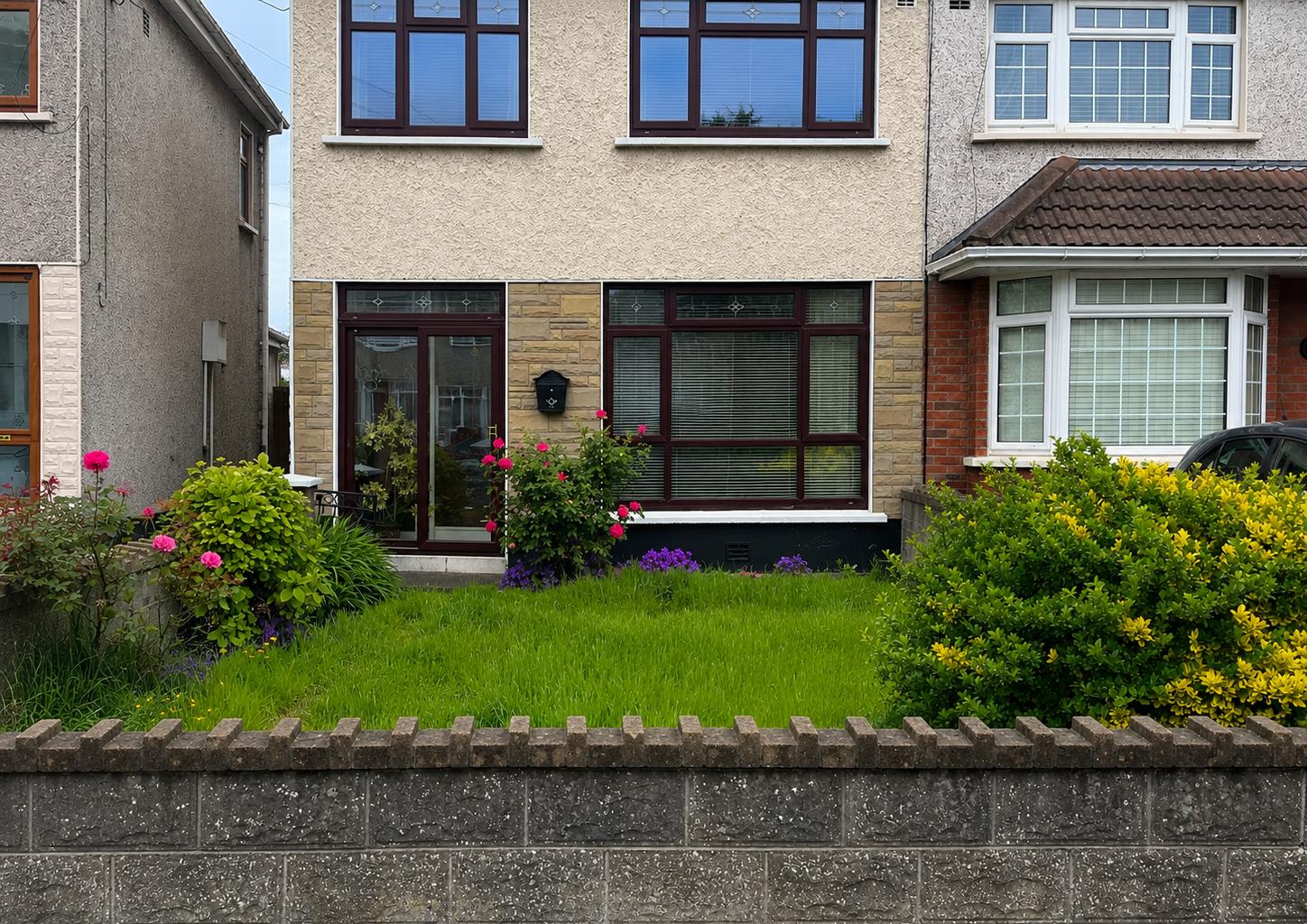
Every Dublin estate has one: the lawn that looks great. Dense, even, deep green, no bare patches, no moss creeping in from the shady corner. And if you're reading this, you might be looking out at the other kind: thin grass, mud where the kids play, moss taking over, and a general sense that the lawn has given up. The honest truth about lawn care in Dublin is that our conditions make both outcomes easy. Get a few basics right and grass grows here almost effortlessly. Get them wrong and the same rain and mild weather that should help your lawn will feed moss and weeds instead.
Most struggling Dublin lawns are not dying from neglect alone. They are struggling because of three very local problems: heavy clay soil that compacts and holds water, shade from houses and mature trees, and a climate where grass grows ten months of the year and never gets a proper rest. Fixing a lawn means addressing those causes, not just mowing more often.
This guide covers what actually goes wrong with Dublin lawns, the seasonal routine that keeps grass healthy, when DIY is perfectly fine, and when calling a professional lawn mowing service in Dublin saves you money in the long run. And if your lawn is beyond saving or your garden is simply too shaded for real grass, we'll point you to the honest alternative as well.
Why Dublin Lawns Struggle: The Big Four Problems
- Moss. The number one complaint. Moss thrives on compacted, damp, shaded ground. It is a symptom of poor conditions, so killing it without fixing drainage and light means it returns every winter.
- Compaction. Dublin's clay soils pack down hard under foot traffic, kids, dogs and rain. Compacted soil suffocates grass roots and creates the damp surface moss loves.
- Shade. Terraced and semi-detached gardens across the city spend half the day in the shadow of the house. Standard grass mixes sulk in shade; shade-tolerant seed makes a real difference.
- Poor drainage. If your lawn squelches in winter, grass roots are drowning. Aeration and, in bad cases, drainage work are the fix. We cover this in more depth in our guide to common Dublin garden problems.
Lawn Care in Dublin Through the Seasons
Spring (March to May)
- Start mowing when growth picks up, with the blade set high for the first few cuts.
- Scarify: rake out the dead moss and thatch choking the surface.
- Aerate: spike or hollow-tine the lawn to relieve compaction and let air and water reach the roots. This one job does more for a Dublin clay lawn than anything else.
- Feed with a spring fertiliser and overseed thin or bare patches. This is the heart of lawn repair and reseeding, and spring's warm, damp soil gives seed the best start.
Summer (June to August)
- Mow weekly during strong growth. Little and often beats occasional scalping.
- Never cut more than a third of the grass height in one go. Scalped grass turns yellow and invites weeds.
- Raise the blade during dry spells and let clippings lie briefly to shade the soil.
- Spot-treat weeds as they appear. Our weed control guide explains which treatments are safe around kids and pets.
Autumn (September to November)
- Apply an autumn feed, lower in nitrogen, to toughen grass for winter.
- Aerate again if the summer has compacted the surface.
- Clear fallen leaves weekly. Matted leaves smother grass and breed moss and disease.
- Keep mowing as long as the grass keeps growing, which in Dublin is often into November.
Winter (December to February)
- Stay off frosted grass; footprints on frozen blades leave dead patches in spring.
- Watch for standing water. Where puddles sit for days, plan aeration or drainage work for spring.
- Service the mower so it is sharp and ready. Blunt blades tear grass instead of cutting it.
DIY or Professional Lawn Care? An Honest Answer
Weekly mowing and leaf clearing are jobs plenty of people happily do themselves. Where a professional earns their fee is the technical work: diagnosing why the lawn is failing, scarifying and aerating with proper machines rather than a hand fork, choosing the right seed and feed for your soil, and timing everything to Dublin's weather. Doing those jobs wrong, or at the wrong time, wastes both the effort and the money.
There is also the simple time question. A proper spring renovation of an average garden takes a full weekend with hired equipment. Our gardening service at Primegardener.ie does it in a visit, takes all the waste away, and returns on a schedule so the lawn never slides backwards. That is what regular lawn maintenance in Dublin is really buying: consistency.
A note on price: searching for cheap lawn mowing in Dublin is understandable, but the cheapest quote often means rushed cuts with blunt blades and clippings left behind. Fair pricing for a proper job, with waste removal included, costs less over a year than fixing a scalped and neglected lawn.
Case Study: The Mud Patch in Walkinstown
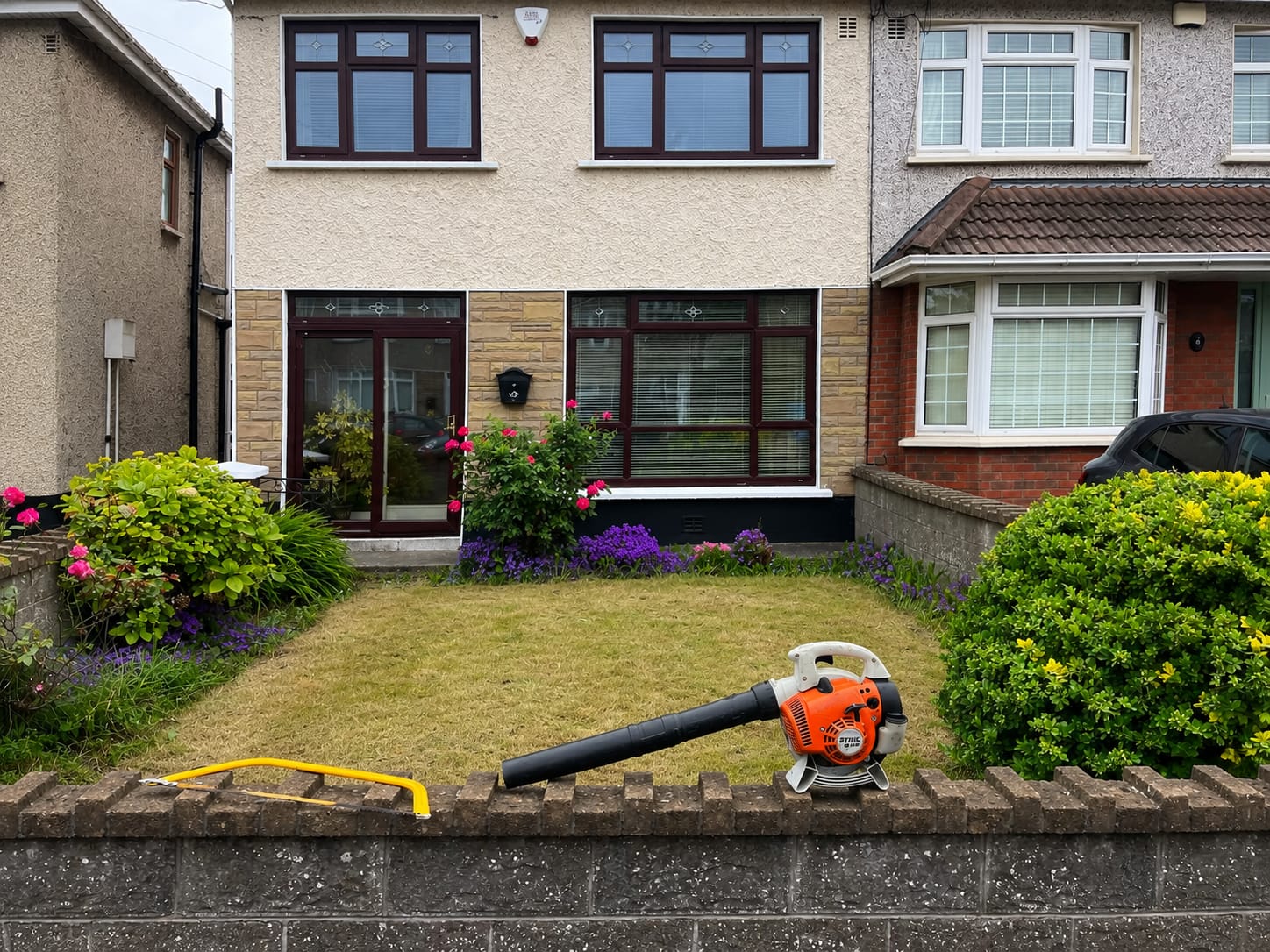
A family in Walkinstown called us about a back lawn that had turned to mud. Two kids, one dog, heavy clay soil and a wet winter had left more bare ground than grass, and what grass remained was buried under moss. They were close to giving up and paving it.
We started with a spring renovation: scarified out the moss, hollow-tine aerated the whole lawn to break up the compaction, topdressed with sandy loam to improve the surface, and overseeded with a hard-wearing, shade-tolerant mix. Then we set up a fortnightly mow-and-feed schedule through the season.
"By the summer holidays the kids were playing on it again. We honestly thought the only option left was paving slabs."
The lawn is not delicate showpiece grass. It is a tough family lawn that handles the dog and the football, which is exactly what they needed.
When Real Grass Is the Wrong Answer
Sometimes honesty matters more than a sale. A tiny north-facing yard that gets two hours of light, or a garden hammered daily by large dogs, may never sustain a healthy natural lawn no matter how well it is cared for. In those cases, modern artificial grass installation is often the better long-term answer, and we install that too. The right solution depends on your garden, not on what we would prefer to sell.
Key Takeaways
- Moss and patchy grass are symptoms. The causes are compaction, shade and drainage, and Dublin's clay soil makes all three common.
- Aeration and scarifying, done in spring and autumn, transform tired lawns more than any product.
- Mow little and often, never removing more than a third of the height.
- Autumn care (feeding, leaf clearing) decides how good the lawn looks next spring.
- Deep shade or heavy daily wear may mean artificial grass is the smarter option.
Related reading: Lawn Mowing Service in Dublin · Lawn Turfing in Dublin · Dog Friendly Garden Ideas for Dublin
Want the Lawn Without the Work?
WhatsApp a photo of your lawn to Primegardener.ie and we'll tell you exactly what it needs and what it costs. One-off lawn rescues or regular mowing and care plans, with clippings and waste always taken away.
Get a free lawn assessmentFrequently Asked Questions
How often should I mow my lawn in Dublin?
Weekly during peak growth from May to September, and as needed in spring and autumn. Dublin grass often keeps growing into November, so don't pack the mower away too early.
Can you fix my patchy lawn?
In most cases, yes. Patchy lawns usually respond well to scarifying, aeration, topdressing and overseeding, timed for spring or early autumn. If more than two thirds of the lawn is gone we may recommend a full re-turf instead, and we'll tell you honestly which one your lawn needs.
Do you treat moss and weeds as part of lawn care?
Yes. Moss treatment and removal, and safe, targeted lawn weed treatment, are part of our lawn care service. We also fix the underlying causes, because treating moss without aerating compacted soil just invites it back.
How much does lawn care cost in Dublin?
A regular mowing visit costs much less than people expect, and full renovations are priced by lawn size and condition. Send us a photo on WhatsApp and we'll give you a clear price before any work starts.
Is autumn or spring better for lawn repairs?
Both work well in Dublin. Early autumn is slightly better for seeding because the soil is warm, rain is reliable and weed competition is lower. Spring is the better time for a full renovation after winter damage.